
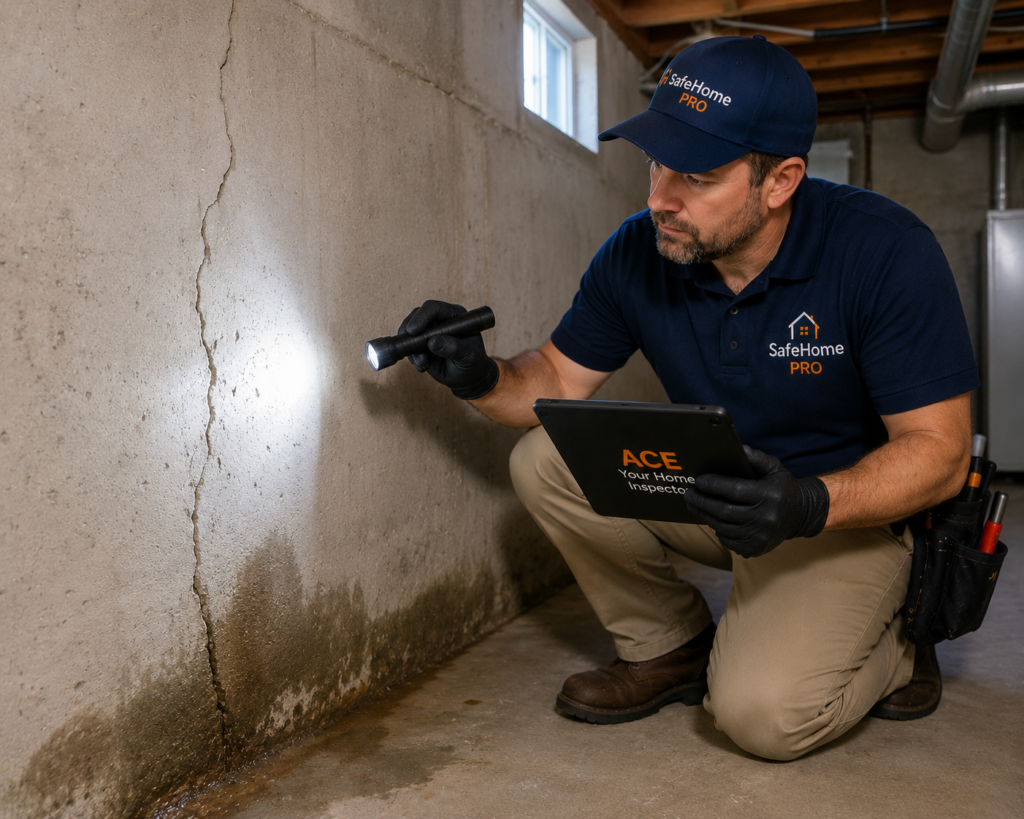
Wet Basement Warning Signs: How Homeowners Catch Moisture Before It Becomes Flooding
Wet basement warning signs almost always show up months — sometimes years — before any visible flood. Knowing what to look for, where to look, and how to read the patterns is the difference between a low-cost early fix and a five-figure remediation. This guide walks homeowners through both.
Why Catching Wet Basement Warning Signs Early Saves So Much
Basements get wet by degrees, not all at once. The visible flood at the end of the process is usually preceded by months of subtle signals: white powdery deposits on concrete, a faint smell after rain, a stain at the floor-wall joint, a slightly soft drywall edge in a finished area. Each of those is the home telling you something is starting.
The reason early intervention is so high-impact is that the cheap exterior fixes — downspout extensions, grading correction, gutter cleaning, window-well drainage — resolve a meaningful share of basement moisture issues. Once the situation has progressed to chronic seepage or visible mold, the conversation moves to interior drainage systems, exterior excavation, or finished-basement remediation, all an order of magnitude more expensive.
The Most Important Wet Basement Warning Signs to Watch For
Efflorescence (white chalky deposits on concrete)
Probably the most diagnostic sign in an unfinished basement. Efflorescence is the mineral residue water leaves behind as it passes through concrete and evaporates. The minerals are pushed to the surface; the water moves on. Efflorescence means moisture has been moving through that section of wall or floor — whether or not you can see water now.
Stains or watermarks at the floor-wall joint
A horizontal line a few inches up the wall, sometimes with a slightly darker concrete or a salt-line pattern, suggests water has pooled at the perimeter at some point. Common in homes without exterior drainage upgrades.
Damp, cool concrete in dry weather
Concrete that feels cool and slightly damp days after a rainstorm, or in a basement that hasn’t flooded recently, suggests sustained moisture migration through the slab or walls.
Musty smell, especially after rain
The single most common early indicator. Read our companion guide on musty smell in basement for the broader pattern.
Visible cracks with discoloration around the edges
Hairline cracks in poured concrete are common and often cosmetic. Cracks with discoloration — staining, efflorescence, mineral deposits — have moved water at some point. Stair-step cracks in block walls warrant a closer look as well.
Peeling paint or flaking concrete sealer
Moisture moving outward from the wall pushes paint and sealer off. A patch of peeling paint at the bottom 18 inches of a basement wall is rarely cosmetic.
Soft or warped finished surfaces
Finished basements show wet-basement signs at the drywall edges first — bottom inch of drywall puffy or soft to the touch, baseboard separating, carpet edges damp or off-color, vinyl flooring lifting at seams.
Standing water in window wells after rain
Window wells should drain to a covered sub-surface drain. Standing water in the well puts hydrostatic pressure against the window itself and is a common entry point.
Active sump pump cycling more than usual
A sump pump that runs only during heavy rain is normal. A sump pump cycling daily or hourly is moving a lot of water and is a leading indicator of high water-table pressure or drainage failure.
Rust on metal at the floor
The bottoms of metal columns, water-heater bases, washing-machine feet, or appliance legs — rust forms there because moisture is sitting on the slab.
Seeing one of these signs in your basement?
Describe what you’re noticing — stain, smell, efflorescence, soft drywall, pooled water — and ACE will help you understand how urgent it is and what to check next, in plain language.
Why Basements Get Wet
- Surface water and drainage. Negative grading, downspouts dumping near the foundation, blocked gutters, and inadequate splash blocks all push rainwater straight against basement walls.
- Subsurface water. A high seasonal water table, blocked or aging weeping tile, or a saturated lot pushes hydrostatic pressure against walls and slabs.
- Foundation cracks and cold joints. Concrete naturally develops shrinkage cracks. Joints between pours can seep when external pressure is high.
- Window wells. Wells without covers fill with rainwater; wells with broken sub-surface drainage hold water against the window.
- Plumbing. A failing water heater, a slowly leaking laundry connection, a sweating supply line.
- Indoor humidity. Not water entry, but contributes to the appearance of dampness and to mold/mildew.
- Poured-versus-block construction. Block walls have more joints and more potential entry points than poured walls; both can leak when conditions are wrong.
How ACE Reads a Wet-Basement Report
The first read on a wet-basement question is whether the water is coming in or being held in. Active entry — visible seepage after rain, recurring damp at the floor-wall joint, a sump pump that cycles more than it should — usually traces back to exterior drainage and grading before anything else. Sustained dampness without active entry — persistent humidity, efflorescence on dry walls, slow musty smell — usually traces back to wicking moisture and indoor air management.
The second read ACE looks for is the home’s age and exterior context. Older homes with original weeping tile and no exterior waterproofing read differently from a 1995 build with a working sump. A few photos from the perimeter, a couple of photos from the exterior after a rain, and a humidity reading is usually enough for ACE to walk a homeowner through which category they’re in and where to look first.
When to Monitor and When to Worry
| Pattern | Severity | Action |
|---|---|---|
| Light efflorescence in one area, no smell | Low-moderate | Investigate source, dehumidify |
| Recurring damp ring at floor-wall joint after rain | Moderate | Exterior drainage corrections first |
| Sump pump cycling unusually often | Moderate-high | Verify operation, inspect drainage |
| Wet drywall, soft baseboards in finished area | High | Stop using area, find source |
| Visible mold spreading on walls or framing | High | Remediation conversation |
| Active water entering during/after storms | High-urgent | Pro consultation; consider emergency mitigation |
| Standing water from a plumbing failure | Urgent | Stop water source; dry and assess |
Practical Homeowner Investigation
- Walk the basement perimeter slowly with a flashlight. Check the floor-wall joint, behind storage, around windows, around the sump.
- Look for efflorescence and stain lines. Photograph anything you see.
- Use a small humidity meter ($15-30) and target 50% RH or below.
- Walk the home’s exterior after a rain. Note where water collects, where downspouts dump (extend at least 6 feet from the foundation), where soil grade slopes back toward the home, and any window-well water.
- Confirm gutters are clear and intact, and that downspout extensions are connected.
- Check window wells — they should have covers or sub-surface drainage; any standing water is a problem.
- Test the sump pump — pour a bucket of water into the pit; the float should activate.
- Use the DIY home inspection checklist for the full basement walkthrough.
The High-Impact Homeowner Fixes That Solve a Lot of Wet Basements
- Extend downspouts. At least 6 feet from the foundation, ideally 8-10. The single highest-leverage fix for many wet-basement issues.
- Correct grading. Soil should slope away from the home for at least 6 feet; the first inch of slope per foot is critical. Add soil where needed.
- Clean gutters and add splash blocks. Twice a year minimum. Overflowing gutters dump water exactly against the foundation.
- Install window-well covers and verify their drainage.
- Test and maintain the sump pump. Replace the battery on backup units annually.
- Run a basement-grade dehumidifier set to 50% during humid months.
- Move stored organic materials off the floor. Plastic bins on shelves, off the slab.
- Address persistent indoor humidity sources — long showers, drying laundry indoors, indoor humidifier overuse.
When to Get Outside Help
Recurring water entry through walls or the floor is a foundation/waterproofing contractor conversation. Active mold growth across more than a small area belongs to a remediation specialist. Sump pump failures or persistent over-cycling deserve a plumber or waterproofing pro. For homes with multiple signs — efflorescence, finished-basement damage, recurring smell — a full home inspection is often the most efficient first step before specialist quotes. The EPA mold cleanup guidance is useful background reading.
Frequently Asked Questions
Is a basement that smells musty actually wet?
Often yes, even if you can’t see water. Sustained dampness in concrete, finishes, or stored materials produces the smell long before liquid water shows. Read musty smell in basement for the full pattern.
Will sealing the inside of the basement walls fix it?
Sometimes yes for cosmetic moisture, but interior sealants don’t resist hydrostatic pressure from groundwater. If pressure is real, the moisture re-routes to seams and joints, or pushes the sealant off. Address the exterior side first.
How worried should I be about a hairline crack in the basement wall?
Most are cosmetic. The clues that matter: discoloration around the crack, efflorescence, dampness, or growth. Stair-step cracks in block walls and growing cracks of any kind warrant a closer look. We’re building a foundation-cluster guide separately.
Should I run a dehumidifier all year?
During humid months, yes. In cold dry winters most basements don’t need active dehumidification, but a hygrometer tells you definitively. Target 50% or lower.
My sump pump runs constantly — is that a problem?
It means the pump is doing its job, but it also means a lot of water is being managed. If cycling is unusually frequent, investigate exterior drainage first. Persistent heavy cycling often warrants a professional drainage assessment.
Can I finish my basement that has light efflorescence?
Not until the source is identified and addressed. Efflorescence is a sign water is moving through the wall — finishing over it traps the moisture in the wall cavity, where it grows mold behind drywall and insulation.
Does a wet basement affect home value?
Yes, often substantially. Buyers and inspectors look hard for wet basement warning signs, and disclosed history of water intrusion is a major negotiation lever. Catching and fixing issues early protects value as well as the home.
Continue Reading
Moisture & Condensation Hub
The full plain-language hub on home moisture — where it comes from, what it does, and how to read it.
Open the hub Issue GuideMusty Smell in Basement
A connected indoor-humidity story — what basement air is telling you.
Read guide Issue GuideCondensation on Windows
A connected indoor-humidity signal at the windows.
Read guide Issue GuideMold Around Windows
Why window frames grow mold first — and what it means for the rest of the home.
Read guide Issue GuideWater Stains on Ceiling
Reading the pattern of a ceiling stain.
Read guide Issue GuideAttic Moisture Signs
A homeowner’s read on attic moisture.
Read guide ToolDIY Home Inspection Checklist
A free seasonal walkthrough — the easiest way to catch problems early.
Open the checklistWet Basement? Get a Plain-Language Read.
Upload photos and ACE will walk you through which warning signs you’re seeing, what they likely mean, and the practical first steps to take.