
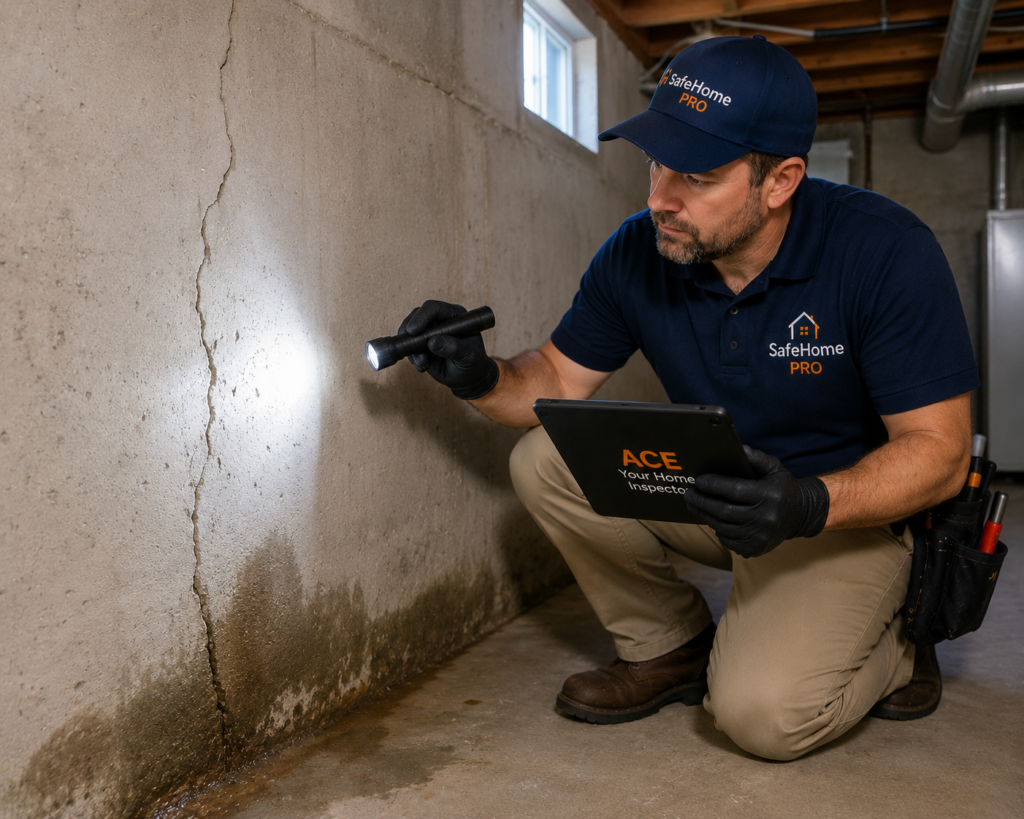
Musty Smell in Basement: What It Usually Means and What Homeowners Should Do
A musty smell in basement air is the most common early signal of a moisture problem in the home — and one of the easiest to dismiss. This guide walks through where the smell actually comes from, what it usually points to, the signals that escalate it from nuisance to action, and the practical steps to take before paying anyone.
Why a Musty Smell in Basement Air Almost Always Means Moisture
A musty smell in basement air is mostly the work of microbial volatile organic compounds — tiny gases produced by mold and mildew growing on damp materials. The materials don’t need to be visibly wet. Concrete that’s been damp for weeks, the back side of a finished wall, the underside of a stored cardboard box, or carpet over a slightly humid slab can all support enough microbial activity to produce that recognizable smell.
That’s why the smell often shows up before any visible mold, water stain, or structural problem. Treat it as an early signal, not a cosmetic nuisance. Tracking down the moisture source while the smell is still mild usually saves money and avoids the larger remediation conversations that come later.
Not sure where your basement smell is coming from?
Tell ACE when it appeared, what’s stored where, and your basement humidity reading — ACE will narrow the likely source and walk you through the right next step in plain language.
Where Basement Mustiness Usually Comes From
High relative humidity
The most common cause in finished and unfinished basements alike. Anything above 60% RH supports microbial growth. In humid climates, summer-only mustiness often points here.
Foundation seepage
Water entering through cracks, cold joints, or porous concrete. Often invisible — the wall looks dry but the back side of insulation or finish material is wet.
Drainage and grading at the home’s exterior
Negative grading, downspouts emptying near the foundation, blocked weeping tile, or window-well water all push moisture into basement walls and slabs.
Plumbing leaks — small and slow
A weeping fitting, a slowly leaking water heater, a sweating pipe, or an old laundry-tub drain can keep concrete damp without flooding it.
HVAC and dryer ducts
A failed condensate pump, an uninsulated duct sweating in summer, or a dryer venting indirectly into the basement all contribute moisture — sometimes silently.
Stored organic materials
Cardboard boxes on a damp slab, old carpet remnants, books, paper, leather, untreated wood — even at “normal” humidity, these absorb moisture and become the substrate for microbial growth.
How ACE Reads a Musty-Basement Report
When a homeowner brings ACE a musty-smell question, the first thing ACE asks for is a humidity reading and a quick description of the basement — finished or unfinished, age of the home, anything stored on the floor, when the smell is worst. With those few details, the answer almost always points to one of three categories before any photos arrive.
If indoor relative humidity is above 60%, the work is almost always upstream of any cleanup — find the moisture source and reduce humidity, then deal with the smell. If humidity is in the 40–50% range and the smell persists, ACE shifts attention to specific local sources: stored cardboard on a damp slab, a sweating supply line, an aging laundry-tub drain, an old foundation cold joint. ACE will walk through which sources are most likely given the season, the home’s age, and what a flashlight walkthrough shows.
When to Monitor and When to Worry
| Pattern | Severity | Action |
|---|---|---|
| Faint smell in summer only, no visible signs | Low | Run a dehumidifier, monitor |
| Persistent musty smell year-round | Moderate | Investigate source, dehumidify, declutter |
| Smell + visible mold patches | High | Source first, then remediation |
| Smell + recurring water staining at floor or wall base | High | Foundation/drainage assessment |
| Smell + family experiencing respiratory symptoms | High | Stop occupying area, get assessment |
| Smell + visible standing water | Urgent | Stop water source, restore environment, pro this week |
What Homeowners Can Investigate Safely
- Buy a small humidity meter ($15-30). Take readings at multiple locations and times. The target is 30-50% in winter, <55% in summer.
- Walk the perimeter slowly with a flashlight. Look at the floor-to-wall joint, near windows, around the sump pit, behind storage.
- Check window wells for standing water or compressed soil.
- Walk the home’s exterior after a rainstorm. Confirm downspouts dump well away from the foundation, the soil grade slopes away, and there’s no ponding near the home.
- Move stored cardboard, paper, and fabric off the slab. Use shelving or plastic bins with lids.
- Run a dehumidifier in the most-musty area for two weeks. If the smell drops, you’re primarily dealing with humidity, not active seepage.
- Check the dryer vent termination — outside the home only.
- Review the DIY home inspection checklist for the basement walkthrough.
A Practical Sequence for Tackling Basement Mustiness
- Reduce relative humidity. A basement-grade dehumidifier is often the single highest-impact step. Set it to 50% RH and let it run.
- Improve exterior drainage. Extend downspouts at least 6 feet from the foundation, fix grading, clear gutters. These are the biggest exterior-side wins for the lowest cost.
- Declutter organic materials. Move cardboard and paper into plastic bins with lids; keep them off the floor.
- Treat any visible mold. Per EPA mold cleanup guidance, surface growth on hard non-porous materials can often be cleaned. Soft, porous, saturated materials usually have to go.
- Address ongoing moisture sources. Plumbing leaks fixed, window-well drainage corrected, weeping tile cleared if needed.
- Re-test after a few weeks. Smell should diminish noticeably within 2-4 weeks if the upstream issues are addressed.
When to Get Outside Help
Recurring water entry through foundation walls is a foundation/waterproofing contractor conversation. Visible mold spreading across more than a small area belongs to a remediation professional. Persistent mustiness after dehumidification and exterior fixes warrants a full home inspection. Anyone in the home experiencing respiratory symptoms after time in the basement should treat the situation as more urgent.
Frequently Asked Questions
Is a slightly musty smell in an old basement normal?
Common is not the same as healthy. Persistent mustiness almost always means something supports microbial growth — usually elevated humidity. It’s worth addressing even if there’s no visible mold.
Will an air purifier solve a musty basement?
It can mask the smell briefly but won’t fix the cause. The growth source keeps producing odors. Reduce humidity and address moisture sources first; air purification is a downstream comfort step.
How long should I run a dehumidifier?
During humid months, essentially continuously, with the humidistat set to 50%. In dry months a dehumidifier may not run much at all if humidity stays below target.
Are bleach or vinegar effective for basement mustiness?
For surface cleaning of small mold spots on hard materials, yes. For an active moisture source they’re irrelevant — the growth returns. Always treat the source before treating the symptom.
Can a musty basement affect health?
For most healthy adults, occasional exposure isn’t a major concern. People with asthma, allergies, immune compromise, or young children are more sensitive. Persistent mustiness with respiratory symptoms warrants a professional assessment.
My basement smell only appears in summer — why?
Warm humid summer air entering a cool basement causes condensation on cool surfaces. Microbial activity then ramps up. A dehumidifier and reduced air exchange between basement and outside both help.
Should I finish my basement if it has a musty smell?
Not until the cause is identified and addressed. Finishing a damp basement seals the moisture in, where it grows behind drywall and insulation. The smell almost always returns — worse, and harder to fix.
Continue Reading
Moisture & Condensation Hub
The full plain-language hub on home moisture — where it comes from, what it does, and how to read it.
Open the hub Issue GuideWet Basement Warning Signs
The visible signs that a basement is taking on moisture — from efflorescence to staining to standing water.
Read guide Issue GuideCondensation on Windows
A connected indoor-humidity signal — what window fogging tells you about the home.
Read guide Issue GuideMold Around Windows
Why window frames grow mold first — and what it means for the rest of the home.
Read guide Issue GuideWater Stains on Ceiling
Reading the pattern of a ceiling stain — size, shape, edges, and timing.
Read guide Issue GuideAttic Moisture Signs
A homeowner’s read of what’s normal up there — and what isn’t.
Read guide ToolDIY Home Inspection Checklist
A free seasonal walkthrough — the easiest way to catch problems early.
Open the checklistMusty Basement? Show ACE What You’re Working With.
Describe the smell, share humidity readings, and upload a photo or two. ACE will walk you through what the pattern usually means and where to investigate first.