
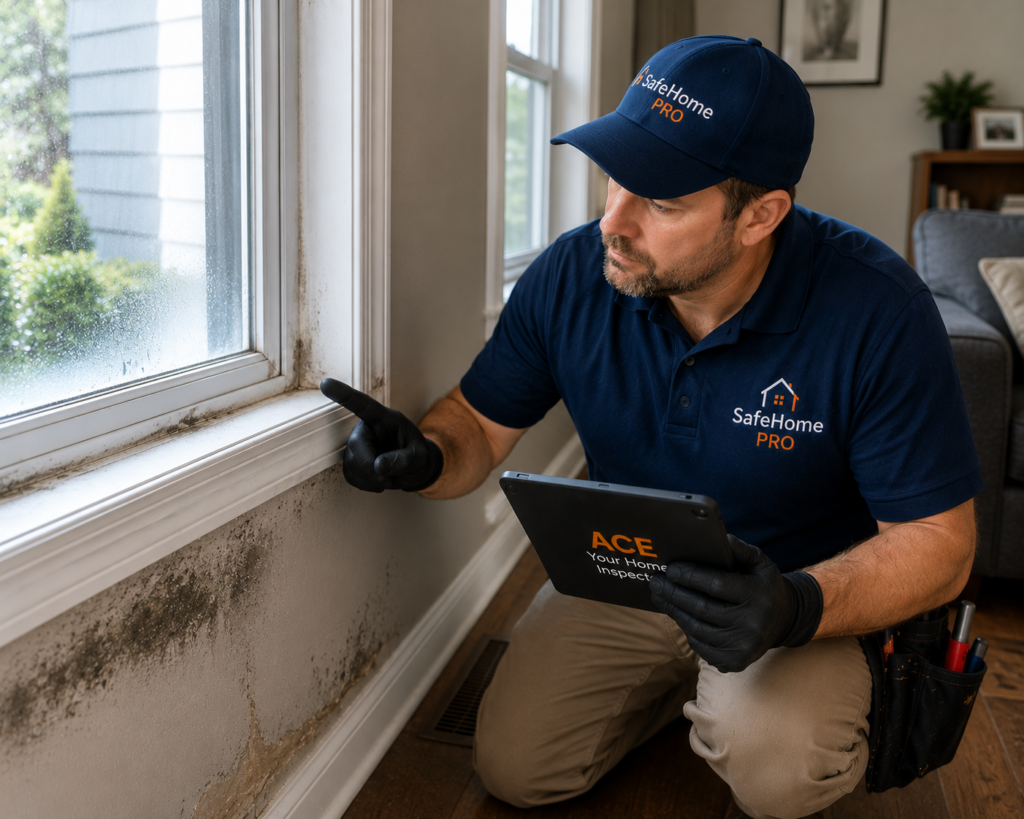
Mold Around Windows: What It Means, Why It Forms There First, and What to Do
Mold around windows is one of the most common moisture-related issues homeowners discover — and one of the most diagnostic. Window frames are usually the first place mold appears in a home, and understanding why helps fix the bigger problem the mold is signalling.
Why Mold Around Windows Tends to Show Up Before Anywhere Else
Mold needs three things to grow: moisture, a food source, and time. Window frames offer all three. The glass and the spacer bar at the edge of an insulated unit are typically the coldest interior surfaces in the home, which means humidity in the room condenses there first. The wood, paint, paper-faced drywall, and dust at sashes and sills act as the food source. And because windows are rarely cleaned all the way around the frame, the moisture and food sit undisturbed long enough for growth to take hold.
That’s why mold around windows is rarely a window problem — it’s a humidity problem the windows are reporting on first. The growth is the symptom; the moisture in the air is the cause. Effective fixes work upstream of the window itself.
Seeing mold growth around a window?
Describe where it sits — frame, seal, sill — when it appeared, and your indoor humidity — ACE will walk you through safe cleanup and how to address the cause.
Recognising Different Patterns of Window Mold
Black or dark gray spots at the sash and frame
The most familiar pattern. Small black dots growing along the sash, sill, or frame — usually most concentrated where the glass meets the frame, where condensation runs and pools. Aspergillus, Cladosporium, and Alternaria are common.
Pink or salmon staining
Often Aureobasidium or Serratia. Common around bathroom windows in homes with high shower-driven humidity.
Greenish growth at the frame
Frequently mildew rather than true mold. Surface-only, easier to clean, but still a signal of sustained moisture.
White fluffy growth
Less common; often a Penicillium variant. May appear before darker pigmentation develops — treat as early-stage growth.
Black streaking down from sash to sill
Tells you condensation has been running rather than just sitting. Indicates persistent, heavy fogging events.
Why Window Mold Develops
- Indoor humidity too high for the season. The single most common driver. See condensation on windows for the upstream pattern.
- Tightly air-sealed homes without balanced ventilation. Modern construction holds humidity in.
- Bathroom or kitchen windows without good exhaust ventilation. The room generates moisture and the window collects it.
- Closed curtains or blinds in winter. Coverings trap a colder microclimate against the glass, increasing condensation.
- Aging window seals. Failed glazing units run colder and produce more condensation.
- Damp basements feeding humidity upward.
- Drying laundry indoors, large indoor plant collections, aquariums, decorative fountains.
- New construction — building materials release substantial moisture as they cure.
How ACE Reads a Window-Mold Photo
The first read on a window-mold photo is whether the growth is on the frame itself, on the surrounding drywall, or both. Frame-only growth is almost always a humidity-and-cleaning conversation. Growth that has spread to the drywall around the window is a different conversation — the moisture has been there long enough to soak materials beyond the frame, and remediation thinking applies.
The second read is whether the growth comes back after cleaning. One-time growth in a winter season often clears once humidity is addressed. Growth that returns within weeks of every cleaning means the upstream condensation hasn’t been resolved — or, less often, that a window-unit seal is failing and the cold edge is just colder than the rest of the room can keep up with.
When to Monitor and When to Worry
| Pattern | Severity | Action |
|---|---|---|
| Small surface spots, hard frame, no smell | Cosmetic | Clean, lower humidity |
| Recurring spots after cleaning | Moderate | Address humidity at source |
| Soft or rotted wood at sash/sill | High | Carpentry repair + remediation |
| Mold on drywall around the window | High | Cut out + replace + treat per EPA mold guidance |
| Recurring growth despite cleaning + dehumidifying | High | Window or seal failure suspected |
| Asthma or allergic symptoms in occupants | High | Stop using room, get assessment |
How Homeowners Should Clean Window Mold and Stop It Returning
Cleaning
For small surface growth on hard, non-porous materials (vinyl frames, painted wood, glass, metal), the EPA suggests scrubbing with detergent and water and drying thoroughly. Bleach is not always necessary; for visible discoloration on hard surfaces, a diluted bleach solution can be used in a well-ventilated area, with gloves and eye protection.
For porous materials — soft wood, paper-faced drywall, fabric, drapes — surface cleaning rarely reaches the colonization in the material. Replacement is often the better path.
Prevention
- Lower indoor humidity to 30-40% in winter, <55% in summer.
- Open curtains and blinds during the day so warm room air reaches the glass.
- Run bath fans 20 minutes after every shower; confirm they vent outside.
- Use the kitchen range hood when cooking moisture-heavy meals.
- Don’t dry laundry indoors.
- Wipe heavy condensation from sills before it sits.
- Run a dehumidifier in the most-humid rooms during humid months.
- Address basement humidity if present (see musty smell in basement).
- Check window seals; failed units run colder and condense more.
When the Pattern Goes Past DIY
Soft, rotted wood at sashes or sills is a carpentry repair, often paired with new sealant or new sash. Mold that has spread to drywall around the window is a remediation conversation. Persistent growth despite humidity control and cleaning suggests a window unit is failing — a window contractor consult is the next step. Anyone in the home with respiratory symptoms should treat the situation as more urgent.
Frequently Asked Questions
Probably yes if it’s growing in spots or rings, especially where condensation collects. Some plain dust or paint failure can look similar. A quick wipe-test on a small area: dust wipes off; mold often doesn’t come off cleanly with water alone.
Only if you’ve addressed the humidity and the substrate is firm. Painting over active mold without remediation buries the problem; it returns within weeks.
For most healthy adults at small surface levels, exposure is mild. People with asthma, allergies, immune compromise, or young children are more sensitive. Persistent or large-area growth deserves a professional assessment.
The frame is the first surface to dry slowly after condensation runs off the glass. Water collects there, and the frame material (wood, paint, paper-faced drywall) is a food source. The glass dries cleaner because there’s nothing to grow on.
Plastic film increases the inner surface temperature of the window, which reduces condensation. It’s a useful temporary measure, but doesn’t address the root cause — humidity in the home.
Open during the day. Closed coverings trap a colder microclimate against the window glass, which makes condensation worse exactly where mold likes to grow.
Modern windows are tighter and the home is tighter overall, but indoor humidity sources (showers, cooking, laundry) didn’t change. Without ventilation, that humidity has nowhere to go and still ends up on the coldest surface — the new windows.
Continue Reading
The full plain-language hub on home moisture — where it comes from, what it does, and how to read it.
Open the hub ›The upstream signal — what window fogging is telling you about the home.
Read guide ›Where high indoor humidity often originates.
Read guide ›Visible signals that a basement is taking on moisture.
Read guide ›Reading the pattern of a ceiling stain.
Read guide ›A homeowner’s read on attic moisture.
Read guide ›A free seasonal walkthrough — the easiest way to catch problems early.
Open the checklist ›Mold at the Window? Show ACE What You’re Seeing.
Upload a photo and a description. ACE will walk you through what the pattern usually means and the practical steps to take.