
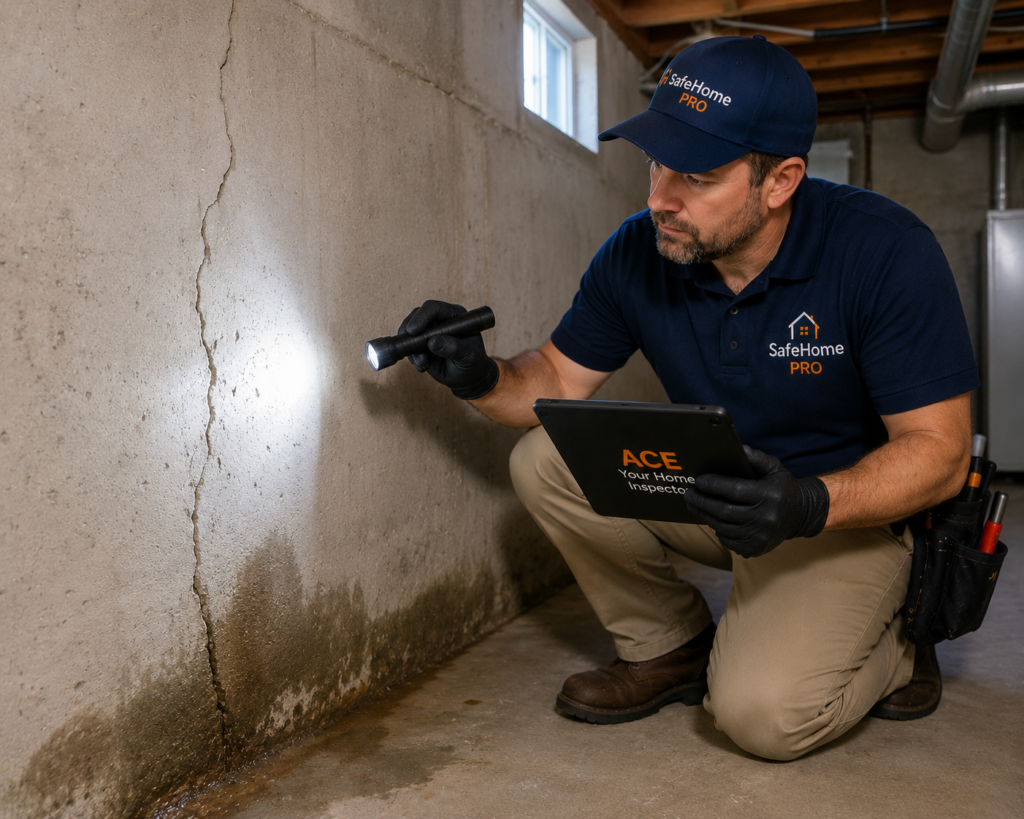
Foundation issues are the home problems that worry homeowners most — and the ones that often look scarier than they are. Hairline cracks in poured concrete are very common and usually cosmetic. Stair-step cracks in block walls, growing cracks, sticking doors, or efflorescence patterns are different signals and deserve a closer look. This hub explains the patterns and where the line is for calling a structural professional.
What Homeowners Typically See
Vertical hairline cracks in poured concrete, horizontal cracks in block walls, white powdery deposits (efflorescence) where moisture pushes minerals to the surface, doors and windows that suddenly stop closing properly, and uneven floors. Each pattern means different things, so the read matters.
- Vertical hairline cracks in poured concrete — extremely common; usually cosmetic; from normal concrete shrinkage during cure. Worth monitoring; rarely an action item.
- Stair-step cracks in block walls — different story. Often indicate movement or settling. Have a structural professional read them.
- Horizontal cracks in block walls — most concerning pattern. Often a lateral-load story (soil pressure pushing in). Get a structural read.
- Growing cracks (changing over months) — the rate of change matters more than the size. Mark crack ends with a pencil + date; re-check in 30 days.
- Efflorescence (white powdery deposits) — moisture story, not a crack story. The wall is wet somewhere — find where.
- Doors and windows that suddenly stop closing — points to framing or footing movement. New onset matters more than long-standing seasonal sticking.
- Uneven floors — older homes settle; the question is whether settlement is historic (done) or active (ongoing).
How to Read Severity Without Panicking
Most foundation patterns are slow stories. A crack that’s been there for ten years and hasn’t grown is a different story than one that appeared in the last six months. The homeowner’s most useful tool here is documentation over time: photograph cracks with a coin or ruler next to them, mark the visible ends with a pencil and the date, and re-check every few months. Growth = professional read. No growth = continue monitoring.
Foundation and Moisture Are Linked
Most foundation problems are moisture problems wearing a foundation costume. Negative grading, blocked gutters, downspouts dumping water against the foundation, and saturated soil all create the lateral pressure that cracks block walls and the moisture infiltration that drives efflorescence. Address the exterior water management first — often it solves the foundation symptom too. The wet basement warning signs guide covers the moisture-side patterns in detail.
Foundation Guides — In Development
Detailed walk-throughs are queued. Until each is live, the DIY home inspection checklist covers the basement walk-through, the wet basement warning signs guide covers the moisture-side patterns, and you can describe what you’re seeing to ACE for plain-language guidance.
How to read crack patterns, when hairlines are normal, and which patterns warrant a structural professional.
Guide in developmentWhy stair-step cracks differ from vertical ones, when they’re cosmetic, and when they’re structural.
Guide in developmentWhen sticking is seasonal humidity and when it points to settling or framing movement.
Guide in developmentWhat the white powder really means (and why scraping it off doesn’t fix anything).
Guide in developmentNot Sure If It’s Cosmetic or Structural?
Describe the foundation pattern to ACE — or upload a photo. You’ll get a plain-language read on what it usually indicates and whether a structural professional should look at it.
Start With ACE ›Related
- All Homeowner Guides
- Wet Basement Warning Signs — moisture is the most common driver of foundation symptoms
- Musty Smell in Basement
- DIY Home Inspection Checklist
- ACE Home Issue Coach
- Book a professional inspection