
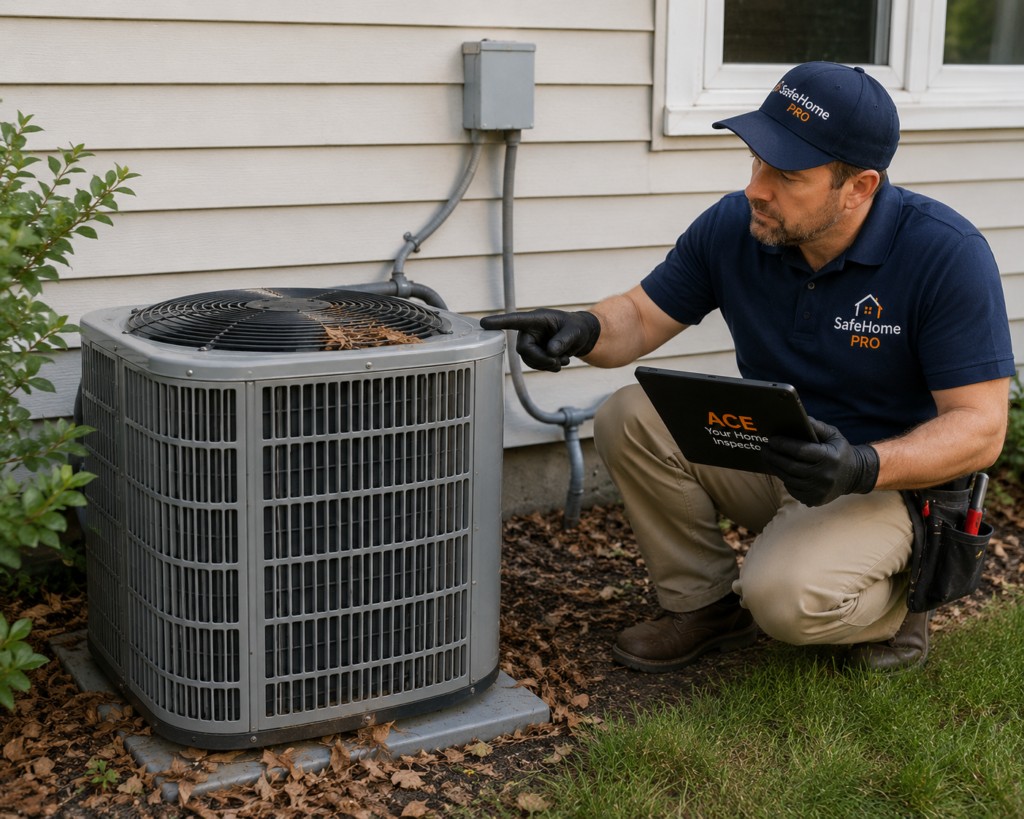
Heating, cooling, and ventilation problems are the home issues that creep up on homeowners — the system runs longer, rooms become uneven, an odd smell appears at startup, condensation shows up around ducts, or the bill rises without an obvious cause. Many of these are routine maintenance items; some are early-warning signs. This hub explains the difference.
Patterns Worth Paying Attention To
A furnace burning-dust smell on the first cold day of the season is normal; a persistent burning or chemical smell is not. Weak airflow at vents in one part of the house can indicate a duct problem or a closed damper. AC short-cycling, ice buildup on outdoor lines, or sweating ducts in the summer all point to specific causes worth diagnosing.
- First-cold-day furnace smell — dust burning off the heat exchanger. Normal. Should clear within 15-30 minutes.
- Persistent burning, chemical, or metallic smell — not normal. Shut the system down and call a licensed HVAC technician.
- Weak airflow in one part of the house — closed damper, duct leak, return-air imbalance, or restricted filter.
- AC short-cycling (turns on and off rapidly) — refrigerant, sizing, or thermostat issue; never normal in healthy systems.
- Ice on the AC outdoor line — low refrigerant or airflow restriction. Stop the system and call.
- Sweating ducts — high humidity meets cold duct surface; insulation or humidity-control issue.
A Safety Note About Carbon Monoxide
Any carbon-monoxide alarm activation is an evacuate-and-call event — leave the home, then contact your gas utility and a licensed HVAC professional. Don’t restart the furnace until it’s been inspected. This applies even if the alarm has only chirped once and reset itself.
If your home runs on natural gas or propane and you don’t have a CO detector on every floor (especially near sleeping areas), get one today. They’re inexpensive, mandatory in many jurisdictions, and the single highest-ROI safety investment in a home.
HVAC Guides — In Development
Detailed walk-throughs are queued. Until then, the DIY home inspection checklist covers the homeowner HVAC walk-through, and ACE can walk you through what specific patterns commonly mean.
Reading short-cycling, odd smells, unusual sounds, and rising bills — what’s maintenance and what’s not.
Guide in developmentShort-cycling, ice on lines, weak cooling — what each pattern typically means.
Guide in developmentBathroom fans, HRV/ERV basics, kitchen exhaust — where most homes fall short and why it matters for moisture.
Guide in developmentLeaky ducts, uneven airflow, sweating ducts, and the cheap fixes versus the expensive ones.
Guide in developmentNot Sure What You’re Hearing or Smelling?
Describe the HVAC pattern to ACE. You’ll get a plain-language read on what it usually indicates, what’s safe to check yourself, and when to stop and call.
Start With ACE ›Related
- All Homeowner Guides
- Moisture & Condensation — HVAC and moisture are tightly linked (humidity, ventilation, condensation)
- Condensation on Windows — often an HVAC humidity-control story
- DIY Home Inspection Checklist
- ACE Home Issue Coach
- Book a professional inspection