
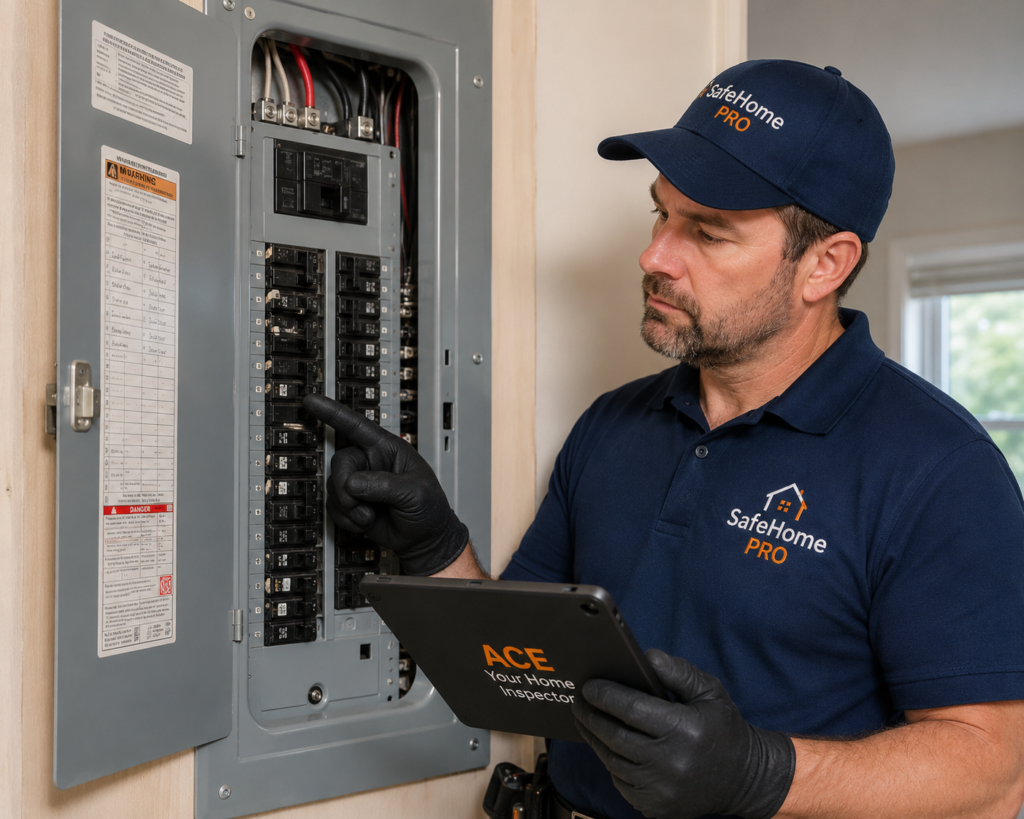
Electrical problems are the home issues where homeowners need to be most cautious — some signs are minor maintenance items, and others are genuine fire-safety calls. The right rule of thumb: anything involving heat, scorching, or burning smells stops being a DIY question. This hub explains the patterns to watch for, what’s typically benign, and where the line falls for calling a licensed electrician.
What Homeowners Notice First
A breaker that trips repeatedly on the same circuit, lights that flicker when an appliance kicks on, an outlet or switchplate that feels warm to the touch, a faint burning smell near a panel or outlet, or buzzing/sizzling sounds. Some of these have benign explanations — others do not.
- Flickering lights — common when a heavy appliance starts; concerning when it happens at random or worsens over weeks.
- Repeated breaker trips on the same circuit — points to an overloaded circuit or a developing fault, not a “bad breaker.”
- Warm or hot outlets, switches, or switchplates — never normal. Stop using the circuit and call same-day.
- Burning, fishy, or electrical smells — always urgent. Stop using the circuit and call same-day.
- Buzzing or sizzling sounds from a panel or outlet — always urgent.
When to Stop and Call a Licensed Electrician
Burning smells, scorch marks, sparking, warm outlets, or any breaker that feels hot. Stop using the circuit and call a licensed electrician the same day. The same applies if your home still has older wiring (knob-and-tube, aluminum branch wiring) and you’re seeing any of the above. Electrical issues rarely improve on their own — they progress slowly until the wiring fails or starts a fire.
A Note on Older Wiring
Many Ottawa-area homes built before the mid-1970s still contain knob-and-tube or aluminum branch wiring. Neither is automatically unsafe — but both require informed inspection and specific handling. If you see fabric-covered wires in your basement, ceramic insulators on joists, or your panel has aluminum-tagged breakers, mention it to any electrician (or inspector) before they start work.
Electrical Guides — In Development
Detailed walk-throughs for each pattern below are queued for the build. Until each goes live, the DIY home inspection checklist includes the homeowner electrical walk-through, and you can describe what you’re seeing to ACE for plain-language guidance — without ever pretending to replace an electrician.
When flickering is a benign load issue and when it points to a loose connection or service-level problem.
Guide in developmentWhy even slightly warm outlets are a stop-using signal, and how to identify the affected circuit before calling.
Guide in developmentReading the pattern — overloaded circuit, ground fault, arc fault, or developing wiring failure.
Guide in developmentWhat a buzzing electrical panel usually means and why it’s always worth investigating.
Guide in developmentNot Sure What You’re Seeing?
Describe the electrical pattern you’re noticing to ACE. You’ll get a plain-language read on what it usually indicates, what’s safe to check yourself, and when to stop and call a licensed electrician.
Start With ACE ›Related
- All Homeowner Guides — every silo and every guide on the site
- DIY Home Inspection Checklist — seasonal walk-through covering electrical and 11 other areas
- ACE Home Issue Coach — describe your specific situation
- Book a professional inspection — when ACE recommends it